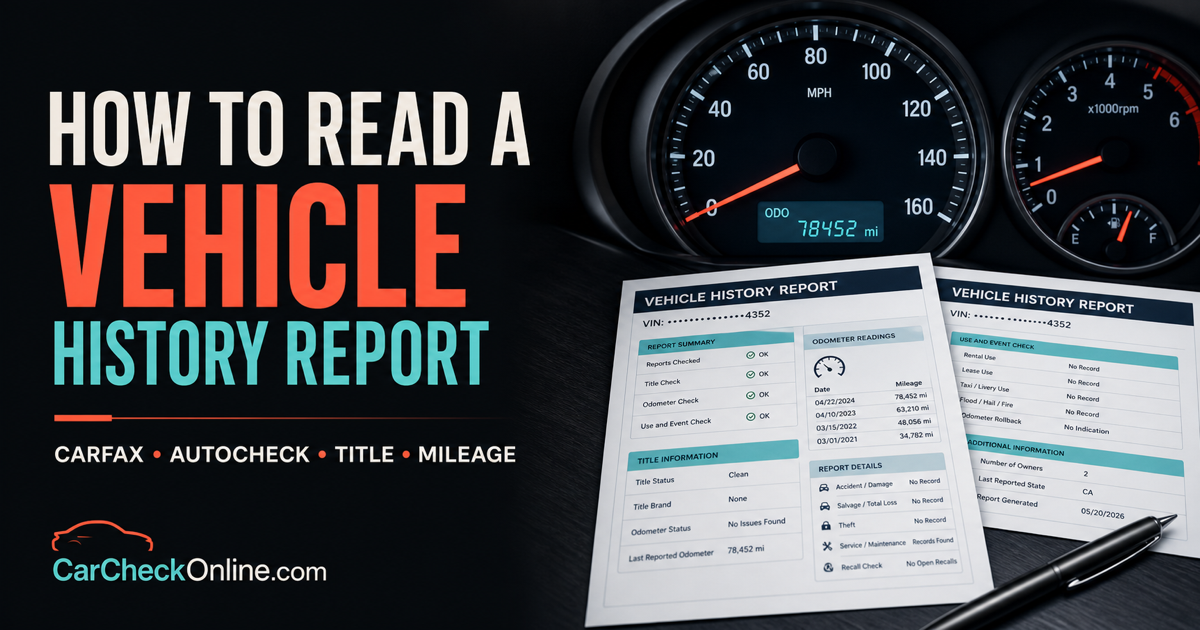
A VIN check starts with the vehicle’s unique 17-character identifier. CarCheckOnline.com checks report availability before payment, then lets you choose one available vehicle history report for US$9.99 with no subscription or hidden fees.
Use the full report timeline—not one badge—to guide the questions you ask next.
What a VIN check actually does
A Vehicle Identification Number identifies the manufacturer, vehicle attributes, model year, assembly plant and serial sequence. A VIN decoder explains that identity. A vehicle history search goes further by looking for records associated with the same VIN over time.
What a vehicle history report may reveal
Coverage varies by vehicle and by the records available to the selected report. Read the full chronology and compare related events instead of treating one summary label as the entire answer.
Salvage, rebuilt, flood and other reported title brands
Reported accidents, damage events and repair context when available
Odometer readings and possible mileage inconsistencies
Ownership, registration and reported use history
Auction appearances, service entries and open recalls when available
How to check a VIN before buying
Copy all 17 characters from the dashboard plate or driver-door certification label and compare the number with the title and registration. Enter it exactly, review the available report choices, and match the completed report to the same vehicle before relying on its history.
Use the report as due diligence—not a guarantee
No vehicle database can guarantee that every event was reported. Compare the report with the physical odometer, seller disclosures, maintenance records, a test drive and an independent pre-purchase inspection.
Official sources for the next check
Use the report together with government guidance, vehicle documents, and an independent inspection.