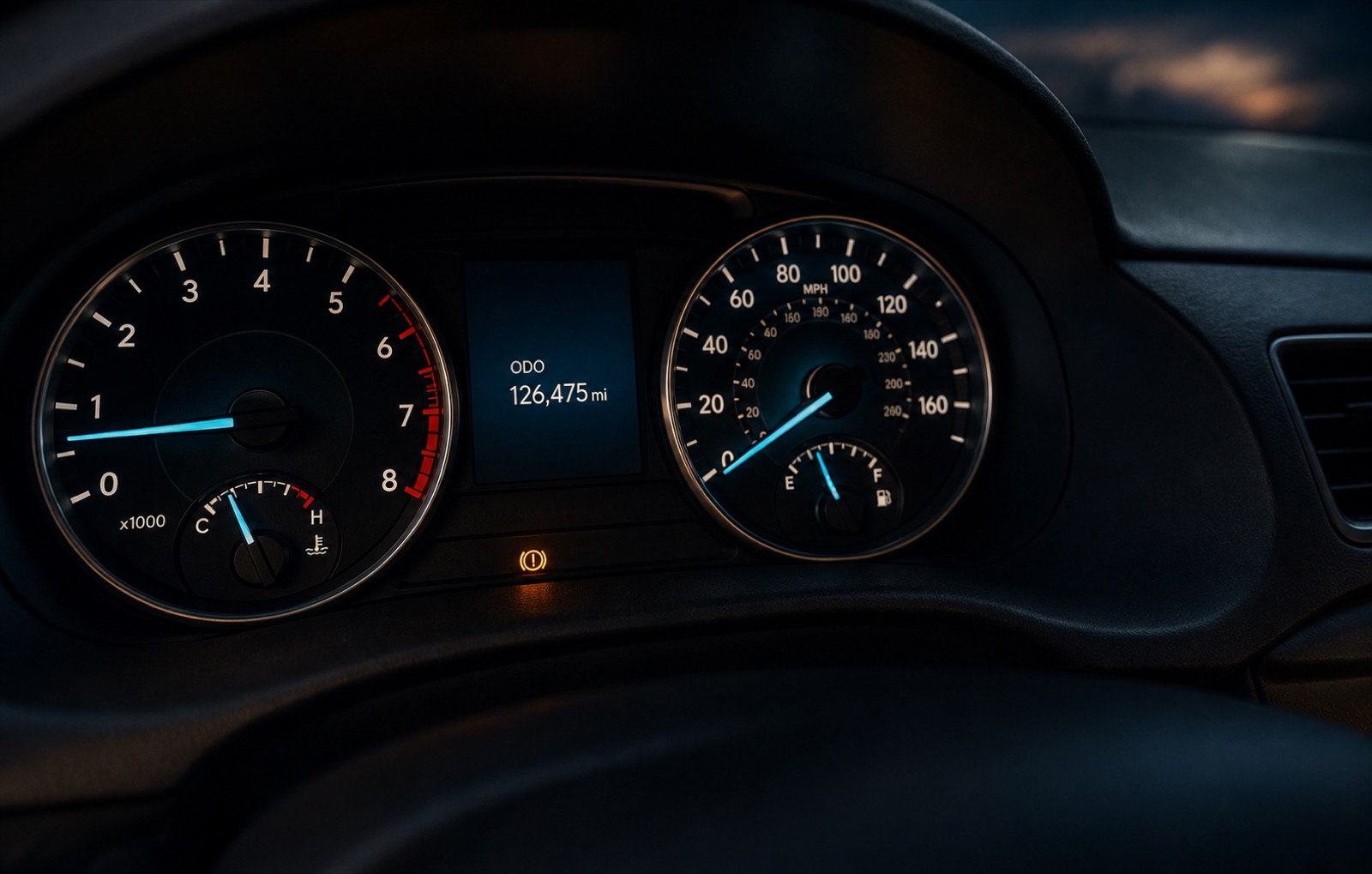
Odometer history and mileage rollback check by VIN.
An odometer history check compares mileage readings recorded at different points in a vehicle’s life. The goal is not to trust one number—it is to see whether the title, service, inspection and sale records form a plausible forward-moving pattern.
Use the full report timeline—not one badge—to guide the questions you ask next.
How to read an odometer timeline
Arrange the readings by date and note the record type behind each one. Mileage should generally increase over time, but clerical mistakes and unit conversions can happen. Investigate the source and surrounding events before deciding what an inconsistency means.
Patterns that deserve a closer look
A later reading below an earlier one is the clearest warning sign, but the full pattern matters. Long gaps, implausibly small increases or conflicts between listings and official records can also justify additional verification.
A sequence that moves backward without a documented correction
Mileage that conflicts with the dashboard or seller’s listing
A replacement instrument cluster without supporting records
Unexplained gaps around title, inspection or auction events
Compare the report with the physical vehicle
Match the VIN, inspect the odometer display and compare wear on pedals, steering wheel, seats and controls with the stated mileage. Maintenance invoices and inspection documents can add dated readings that support or challenge the report timeline.
Document the explanation before buying
If the seller explains an inconsistency, request dated documentation and verify it independently. Do not accept a verbal explanation as a correction to the record, and do not assume a vehicle report replaces an inspection.
Official sources for the next check
Use the report together with government guidance, vehicle documents, and an independent inspection.