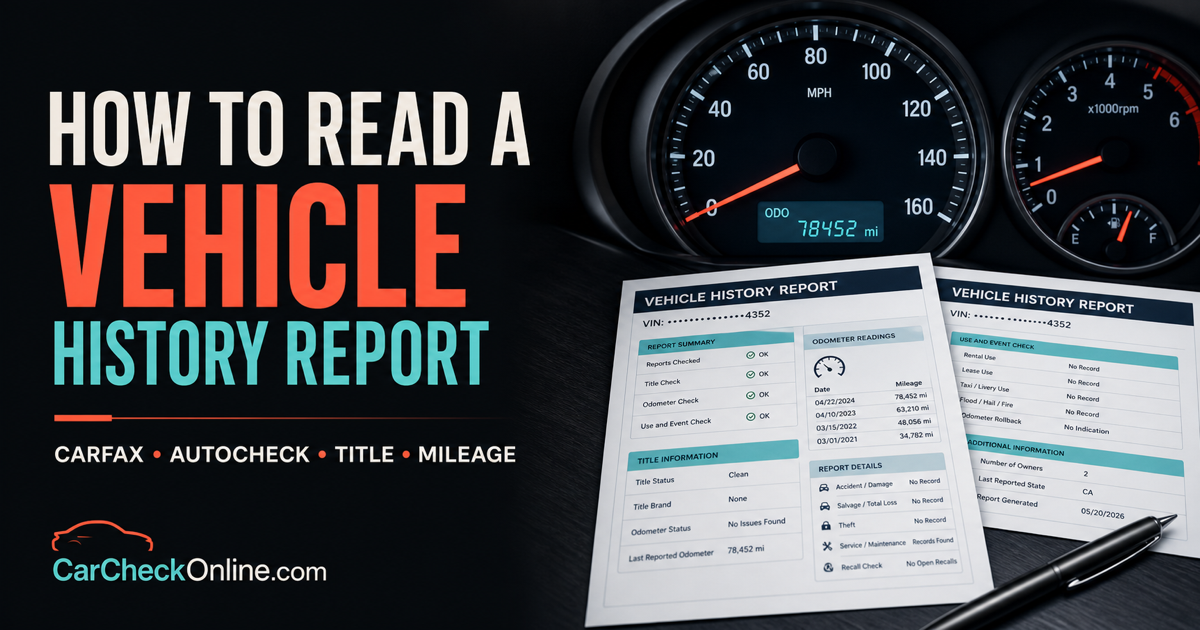
Why a vehicle report matters before a used-car purchase
A clean exterior cannot explain the car’s earlier title status, reported damage, mileage progression or ownership changes. A vehicle report by VIN gives those records a chronology so you can identify conflicts and ask more precise questions.
Accident and damage history
Reported collision or damage entries can provide dates, affected areas and other event context when available. Compare those entries with seller disclosures, repair invoices, paint and panel condition, and an independent inspection.
- Look for repeated damage events rather than one isolated label
- Compare event dates with ownership and sale activity
- Ask who completed repairs and request supporting documentation
- Treat a missing event as unknown—not proof that no damage occurred
Title, odometer and ownership history
Title brands such as salvage, rebuilt or flood can materially change a purchase decision. Odometer readings should normally form a plausible forward-moving sequence, while frequent owner changes or inconsistent use descriptions deserve additional verification.
Auction history and the complete timeline
An auction appearance may add a date, condition announcement, mileage entry or photographs when available. Read auction events beside title, accident and ownership records; the relationship between events is usually more useful than any one item alone.
What a history report cannot guarantee
A report reflects records available to the selected service. It does not certify mechanical condition, predict future reliability or replace document verification, a road test and a qualified independent inspection.